Showing posts with label Interviews. Show all posts

Friday, May 1, 2009

Crores on propaganda shows rulers desperate: Azad, CPI(Maoist))

Comrade Azad, spokesperson, central committee, CPI (Maoist), talks about why his party has called for an election boycott, how it plans to implement it, why Left-led Third Front government is out of the question as they are trying to brand themselves secular only to grab power. Azad spares no one, whether it is L K Advani, Congress, Mayawati or Prakash Karat, calling them opportunists.

This is one of the biggest elections with about a billion voters participating. Don't you see it as people's growing faith in parliamentary democracy?

Certainly not. Every day, media, central and state governments and all contesting parties are dinning into the ears of people to exercise their vote. This shows the desperation of the ruling classes. Crores are being spent on propaganda alone. They are so scared that they cannot imagine allowing voters the minimum democratic right to reject parties and candidates contesting the elections.

Your party has called for poll boycott. But involvement of people in elections seems to be growing.

There is neither any interest nor involvement of people in the elections. Even the narrow base of some parties has taken a beating this time. Contrary to images you see on TV, the involvement of people has declined compared to earlier elections. Hence, the desperate attempt by rulers to rope in film stars, cricketers and popular personalities into publicity campaigns to educate people regarding the virtues of parliamentary democracy, and about the great responsibility of citizens in casting their votes.

Left parties are trying to build a non-BJP, non-Congress alternative at the Centre. What is your view on the Third Front?

The Third Front forged by CPI and CPM as a secular democratic front comprising non-Congress, non-BJP forces is actually a congregation of self-seeking discredited opportunists, all of whom have proved to be hypocrites and double-dealers in their respective states. Who needs to be taught about the infamous history of a Chandrababu Naidu, a Jayalalitha, a Mayawati, a Deve Gowda, a Naveen Patnaik? These leaders and their parties, who had, at one time or the other, shared power with the Hindu chauvinist BJP, are being given secular-democratic image by the Left.

The Karats, Yechuris and other power brokers of the so-called Left had churned out the slogan of anti-communalism to justify their alignment with the most loyal agent of imperialists, Congress, during the 2004 elections. Now, these opportunists see anti-communalism in parties like TDP, BSP, AAIDMK, JD(U) and BJD, all of whom had never really demarcated themselves from communal BJP, and have no compunction in striking an alliance with it if it gave them a share in power. For our Marxist ideologues, all these forces have suddenly become secular. One should not be surprised if they once again become the tail of Congress after the election.

Why do you say that?

Just see. They found secularism, anti-imperialism and democratic moorings among parties such as TDP, a party which was first to transform a state into a laboratory of the World Bank and is responsible for the murder of over 2,000 Maoist revolutionaries besides the high-level of corruption of the regime led by Chandrababu Naidu. There are other opportunists such as Jayalalitha's AIADMK that had become infamous for the scale of corruption, abuse of power and fascist suppression of people's struggles in TN; Naveen Patnaik's BJD has sold the state to imperialists and proved itself to be executioner for the imperialists by massacring adivasis in Kaliga Nagar, POSCO, etc, besides protecting saffron hoodlums as they went about killing, raping and persecuting Christians. Deve Gowda's JD(S) shared power with BJP and broke with it only when the latter wanted a greater share of power; you have Mayawati who would do anything to grab power whether it be power-sharing with the BJP on rotational basis, or striking an alliance with Brahmins and subordinating Dalits to upper-caste Hindus, besides crushing all opponents ruthlessly. 

The Third Front has certainly weakened the two major alliances, NDA and UPA, and has led to further fragmentation of Indian polity.

How will you take your boycott campaign to the people?

We began after EC declared the poll schedule. Our stand has been made clear to people through circulars, press statements, interviews, leaflets, posters, wall writings. Cultural teams stage performances among the people. We will carry this out till the last phase of elections. It also includes questioning candidates and party members, gheraoing them, making them confess their misdeeds before the people.

Then there is active boycott where we prevent candidates from carrying out their campaigns in villages and smaller urban centres in our areas. We warn the parties not to venture out into our areas. When they do not heed our warnings, we stop their campaign, beat them up if they are notorious elements, burn their vehicles, conduct people's courts where possible and make the party representatives confess the misdeeds of their respective parties and seek apology from the people. They are let off after they agree not to come to the villages again. We carry out counter-offensive actions against police and central forces who are used by the reactionary rulers to enforce elections at gun-point. Basically our active boycott too is a political campaign though we undertake some actions aimed at destroying enemy forces.

What about the growing impact of regional parties?

The elections this time are the most complex, most crisis-ridden and most fragmented. Extreme instability and contradictions plague every party and candidate. No party or candidate seems to be certain of the poll outcome. Hence they are resorting to all sorts of gimmicks to attract the apathetic voter. The desertion by the Left, Lalu's RJD, Mulayam's SP, Paswan's LJP, Ramdoss's PMK have left Congress and the UPA in a pathetic condition. Likewise, BJP and its NDA allies have lost support of strong allies like BJD, AIADMK and several smaller parties. Neither BJP nor Congress is in a position to hold their respective alliances together and centrifugal tendencies will continue to weaken these further.

What is the alternative Maoists are offering to parliamentary democracy?

The alternative is people's democracy where it is the people, and not a few moneybags, who decide the destiny of the country and their own lives. It is genuine democracy as seen from the grassroots level to the top and not vice versa. You can see e grassroots democracy at work in the vast tracts of Dandakaranya where Maoists are running a parallel government. There, people are supreme and decisions are made through gram sabhas, assemblies of the people and not by invisible hands. The people's courts, of course, will be refined further but the content remains the same, deliverance of real and speedy justice by taking the side of the oppressed, persecuted people.

Friday, September 12, 2008

Interview with Com. Janaki (Anuradha Gandhy) from the March 2001 issue of Poru Mahila, the organ of Krantikari Adivasi Mahila Sanghatan, DK.


Via Pmsgindia.blogspot.com

People’s War has shattered the hesitations of the women of Dandakaranya!

(In this issue of Poru Mahila we are introducing to our readers Com. Janaki who had been working in the urban movement and had come to Dandakaranya to observe the adivasi peasant movement and to participate in it. Com. Janaki had led the guerilla squads directly as a divisional committee member of South Bastar from 1997 to 2000. Poru Mahila chatted with her on her experiences in the urban movement and in the adivasi peasant movement. We are here presenting the main features of that conversation – Editor, Poru Mahila).

Po. Ma: Com. Janaki, would you please first explain to us the oppression faced by urban women?

Com. J: Though all women in India are under feudal, capitalist, imperialist and patriarchal oppression, it is seen in various forms in different areas, the urban and the rural areas. The working class and middle class women in urban areas have some specific problems.
Firstly, if we look at the problems inside the family, even in urban areas women are oppressed by the feudal culture.

Though the oppression of this culture may be less severe, still the majority of the young girls and women do not get the right to take important decisions regarding their lives from the family. The unmarried girls are under pressure to marry men from the same caste and same religion according to the decisions of the family. If a girl decides to marry a man of her choice from another caste or religion she will be subjected to a lot of pressure. She would have to face severe opposition from the family. Even if a woman wants to work outside home she will have to take the permission of her father, brother or husband. People of some castes and religions (for e.g. the Muslims and Kshatriyas) do not like their woman to do jobs. So it becomes inevitable for women to fight even for economic independence.

In addition since capitalist values have spread widely man-woman relations have also become commercialized and women are facing severe problems. The dowry and other items which have to be given to the grooms’ family before and after marriage has become a big problem for the parents who gave birth to girls. Added to that, it had become common to all communities to harass women for dowry both physically and mentally. When the wife’s life can be measured in money and gold killing her for their sake is not far behind. This terrible situation can be found in many households in the urban areas now-a-days. Especially since the past 25-30 years may be India is the only country in the world where the new crime of burning brides for dowry has come into vogue.

One thing we have to observe is that a part of women belonging to the working class and the middle classes do not get an opportunity to go out and take up jobs. All their time is spent in house work and working for the family. As a result they depend on others for their living. Socially they depend on their husbands. That’s why they don’t try to do anything independently. There are so many restrictions on them to venture out or step outside the threshold. And if we look at the women who take care of their children’s studies it is almost like a machine. All her work revolves round her husband, the children’s studies and sending them to tuitions.

The conditions of the working class in urban areas are pitiable. The main reason is the severity of the problem of not having a place to stay. So the poor are forced to set up house illegally in open places. Many of them build a hut on the sides of the roads, railway tracks and sewers (even on top of sewers). In narrow lanes and the sides of the roads hundreds of families are living by building shacks. There is not even an inch of space to build a bathroom or a place which can be called a verandah.

As the towns expand slums keep increasing on the sides of roads, on rocky places and on the small hills inside the town. They do not have toilets or water facilities. Crowded people, polluted environment, and lack of basic amenities – women do their work facing all these problems. Fighting for water is a common sight. In bastis like these goodaism and their harassment is another problem they face. But above all the biggest problem is the demolition of these bastis by the municipal and government authorities on the allegation that they are illegal. Usually it comes upon the women to oppose these demolitions. Because when officers come in the daytime with the police and bull dozers it is usually the women and children who are at home. The capitalist system does not recognize the right to have a household as a basic right.

Women in urban areas have many opportunities to step out of home and work. They get jobs in factories, offices, schools, hospitals and shops. But in many jobs they are not paid equally with men. Or the salaries are so low that they cannot run a household with that. Many working class women work in the construction industry under the contractors. Many women work as maids. All these works come under unorganized sector. These do not have any job guarantee or a guarantee for salary.

On top of it they have to face harassment from the contractors and the men under whom they work. This takes place in many forms. Not only the working class women but even educated middle class women are facing such harassment. Women are harassed with such pressurizing tactics as threatening to oust them, not giving them work, transferring them, writing bad remarks in their records etc. Very few women are able to share such things with others.

Now-a-days in big cities electronic industries of the imperialists have come up on a large scale. Girls are employed in many of them. But the problems of more labour, less salaries and ban on organizing are present in these industries. So they have to fight even for the basic right of forming unions.

In the past some industries like beedi making and agarbatti making were thriving in households. Now even many new companies are giving most of the work to do at home. The poor housewives are taking up these jobs thinking they can earn a bit while being at home. There is lot of exploitation in this work. Even if they work all day long with the help of their family members it is difficult for them to earn even 20 rupees. The labour power of poor women is paid very less. They are being exploited a lot is what I want to say.

Lastly, another point is the influence of imperialist culture is very great on the urban women. They are not only influenced by consumerism but are also victims of it. This is increasing day by day. Instead of human values they are giving more importance to beauty and beauty products. As a result there is an environment of insecurity due to atrocities and harassments in the urban areas. The young women are facing a feeling of insecurity to step out of the house. In an urban life women are suffering from many such problems. But there are very few organizations which fight against them at present.

Po.Ma: Tell us about the various trends in the women’s movement.

Com.J: Around 1980s there was a spontaneous outburst of women’s movement in many parts of the country, especially in the cities. This movement was an indication of the increasing democratic consciousness and anti patriarchal consciousness among the women. After the Naxalbari movement dealt a severe blow to the semi feudal, semi colonial system in India, there was an outburst of working class and student movements and there was the Emergency and the social, economic and political crises of the ruling classes – the women’s movements sprung out of this background.

Internationally also there was the influence of the student and women’s movements. Mostly the student, middle class and professional women participated actively in these movements. Out of these spontaneous democratic movements many small and big women’s organizations also took birth. But in the past 20 years there have been many changes in the women’s movement, their political character and in these organizations. Later the women’s liberation movement dependent on the urban middle class women split into various political and ideological streams. In the nationality movements, especially in the Kashmiri struggle for their self determination the active participation of women has increased considerably. Women are playing a prominent role in exposing the inhuman atrocities of the police and army.

Under the leadership of the party revolutionary women’s movement has developed well in the rural areas especially in Dandakaranya and North Telengana. Even the BJP and RSS have recognized the strength of women and are paying attention to spreading decadent social values and vicious politics among them.

Many women who had spontaneously participated in movements against dowry deaths, sati and harassments drawing the attention of the nation towards such problems had withdrawn from the movement. But many out of them have gained a name for themselves as researchers and ideologues on women’s issues both in India and abroad. Many of them founded voluntary organizations (NGOs). They are getting funds from international agencies for women studies and emancipation of women.

But they have a feminist viewpoint and a feminist ideology. Now they have become propagandists for feminism, meaning patriarchy is the main problem of women, we have to fight only against patriarchy. But patriarchy has its roots in class society. In all societies it is perpetuated by the exploiting classes, i.e. feudalism, capitalism and imperialism. So fighting patriarchy means fighting against these exploiting classes. But the feminists are against recognizing this. They believe women’s conditions in this society can be changed by politically lobbying with the governments and by propaganda alone. In reality this feminist stream today is representing the class outlook and the class interests of the bourgeois and upper middle class
women in the country.

The women organizations of revisionist parties like CPI, CPM and Liberation are working actively in some cities. They run movements on social and political issues of women. Along with issues of women’s oppression they even take up processions and do dharnas on problems like price rise etc. They are different from the feminist stream, because they don’t give importance only to struggles against patriarchy. But they are also completely reformist organizations.

Because of their revisionist politics they are not linking the women’s liberation with revolution and are working with the belief that by changing governments they will be able to improve their conditions inside this existing social framework itself. For e.g. for the past 2, 3 years they have concentrated all their activities on gaining the right of 33 percent reservation for women in the parliament. Actually the common people have lost confidence on the corrupt parliamentary system long back. It has also been proven that whoever gets elected to the parliament will always serve the exploiting ruling classes and not work for the rights of women or those of poor people.

There are some organizations in the urban areas which are working actively basing themselves on Marxist analysis, seeing the roots for the exploitation and oppression of women in the class society and recognizing the link between women’s liberation and social revolution. Since a decade they have been working among the working class, students and employees among women. Especially they are working very well in Andhra Pradesh and Karnataka. They are not only taking up movements against women’s oppression and other problems but also doing extensive propaganda among women about their rights and about the exploitation and oppression perpetuated on them.

It is an alarming phenomenon for the democratic and revolutionary women’s movements that the Hindutva forces are also working among women. They are reinstating age old feudal values in the name of opposing western culture. In the name of Hindu traditions and Bharat Mata they are suppressing the growing consciousness of women. Not only that, they are carrying vicious propaganda against religious minorities among them. They are even giving them military training in the name of Nari Shakthi.

In brief, the women’s movement is divided into various ideological streams all over the country. We have to study them and build up a strong women’s movement by fighting against the wrong ideological trends in them.

Po.Ma: How much do the outside people know about the revolutionary women’s movement? What is its impact?

Com.J: The adivasi women’s movement emerging in the Dandakaranya since the last decade has a lot of prominence in the history of contemporary women’s movement in India. The vigor and initiative of Kashmir women is more than in other parts of the country. Thousands of women are coming into the streets opposing the cruel repression of the army and all kinds of atrocities. After the political activeness of Kashmiri women it is the Dandakaranya adivasi peasant women who are playing active role socially and politically. They are organized on a wide scale in large number of villages. They are opposing the age old patriarchal traditions inside the Gond adivasi society.

They are participating in the armed struggle against the exploiting government and its army and in political campaigns. This is a big victory of the Krantikari Adivasi Mahila Sanghatan.
But it is very sad that very little is available outside about the extent of the KAMS and about its activities. The CPI (ML) (People’s War) members and sympathizers in other states know little about it. The party put in some efforts for this. The paper written for the Patna seminar (it was published in Telugu and Hindi), the book on women martyrs and some stories and short stories helped in propagating it. But information about this revolutionary women’s movement is not going out regularly. Even your magazine ‘Poru Mahila’ is seen outside very rarely. It is necessary to plan its distribution outside the movement areas also.

Nevertheless whatever little information they maybe getting but those belonging to democratic and revolutionary organizations are very much enthused about it. They are getting influenced by the determination and courage displayed by adivasi women. Widespread propaganda about KAMS and its activities is much needed. Through that we can give a fitting reply to the government bad propaganda about the approach of revolutionary parties towards the women’s question.

Po.Ma: Tell us about your experience in DK.

Com. J: Before coming to DK I read articles and reports about the women’s movement here. But I did not have an assessment that it was so widespread. That’s why I was very happy to seeing the size of this movement. I must tell you something. In the lessons taught about tribal societies in the colleges they say that the Gondi society is very liberal. But after observing the Muria, Madia and Dorla people from close quarters I understood how patriarchal the tribal society was too. I understood how important it is to study the problem of women’s oppression deeply. Though the participation of adivasi peasant women in the production process is very huge patriarchy had curbed their rights.

While writing about the women’s movement during the war for new democratic society in China Jack Beldon, the American writer and journalist had written, ‘The Chinese Communist Party has got the key to the victory of the revolution. They have won over the most oppressed section of the Chinese society’. When I saw the women’s movement in DK it were these words of Beldon which came to my mind. In fact, after the Chinese Revolution it was the revolutionary movement in DK that has proven that where there is a people’s war, where there is armed struggle against the feudal, comprador, imperialist system for the victory of New Democratic Revolution, the working class women participate actively on a large scale for the emancipation of the whole society as well as for their own emancipation.

People’s War had shattered the hesitations of the women. It doubled their strength. It showed the path for the liberation of women. There is a link between the semi feudal semi colonial society and women’s oppression. It has been proven once again by this victory of the DK party that the Marxist principle that we can carry forward the fight against patriarchy only along with the fight to end this system is correct.

Wherever the party is working systematically, we can see that the participation of women is more in all political activities and movements. In 1998 due to the severe famine conditions in South Bastar many women had migrated to Andhra Pradesh for daily wage work. There were KAMS range committee members too among them. But when we asked them to come for March 8 meetings, in one place 700 and in another 450 had attended. Before that in rallies against famine conditions thousands of them had participated. When I was there women got recruited into PGA on a large scale. In some places the recruitment of young women was more than the young men.

The thing which influenced me the most was that the wives of married comrades who were already in the squads are also getting recruited. Many of them had given away even their little children to their relatives and are becoming guerilla warriors in the ongoing great People’s War for changing this society. And, I have seen many women comrades who stood steadfast with the People’s War without looking back even though within a few months their husbands had died in police encounter or in some other accident. By breaking away from the traditional, dreary, narrow confines of the family they like this new life more though it is full of dangers. In that manner their life and their existence is becoming meaningful. I have seen many comrades taking training and taking up new responsibilities.

Building up KAMS units in every village, election of their committees, election of Range Committees in range conferences, sending the unit members to villages for propaganda campaigns, participation in bandhs and other protest activities, giving them military training – all these are victories of this movement. But what I have observed in my experience is that since the AC members are engaged without respite in various kinds of responsibilities and due to some routine work style KAMS work is being neglected. We have to think of new methods to involve the elderly women in the villages. Women and their children are facing a number of health problems. By increasing their understanding in these matters and by paying special attention to their welfare we can increase their zest. We have to increase their participation in the village level meetings. Many people call the KAMS as an organization of young women. Widening their narrow knowledge of society is another challenge in front of us.

Likewise there is a need to give special social and political training to women members in the squads and platoons. We have to plan to give them continuous education in scientific knowledge regarding health problems. Though there are discussions on these topics due to lack of time and due to getting immersed in various works they get postponed. We can get rid of their inferiority by giving them scientific knowledge and imbibing wide social thinking among them.

Po.Ma: What is your message to the women working in squads and in KAMS in DK?

Com.J: Our adivasi women comrades in DK are building a new history today. Though it is most backward area of the country it is in the first place in the ongoing women’s movement in the country. They are answering the guns of the police in fitting manner by fighting equally with the men comrades in the armed struggle to free this country from the vicious grip of imperialism, feudalism and comprador bourgeois clutches. In the villages they are standing up for their rights by facing the threats and pressures of village elders. They are weakening patriarchy in Gondi adivasi culture.

Though they are opposing such big enemies and forces, the shyness and sense of subordination whose remnants are still present, are also their big enemies which are obstructing their development. Inferiority complex comes out of these. Its roots are very deep. What I want to tell my KAMS colleagues is that they should increase their self confidence. They have to fight against the enemy inside them. In the coming days KAMS will be facing many big challenges. The state repression is already there.

Apart from that, the government will try to keep the adivasi society and culture in backwardness with the help of village elders and through adivasi leaders. It will become necessary for the KAMS to face them politically. Likewise the KAMS should keep itself ready to put forward its understanding regarding true liberation of women by intervention in the women’s movement which is going on in the form of various streams in the country. To face all these challenges our women comrades should attain political and ideological maturity and have self confidence.
***

(Translated by Nallamma. All emphasis in the original interview)

Tuesday, August 21, 2007

INTERVIEW WITH PRACHANDA


What are the planning Maoists have, after their Fifth Plenum? What will be the future of the CA polls? What policy will the Maoists embrace towards India? And how far will the Maoist-SPA alliance go? Maoist Chairman Prachanda spoke on these and various other contemporary issues in an exclusive interview with Nepal magazine recently. Excerpts of the interview.

Q. Your Fifth Plenum (extended meeting) drew much attention. What was so special about it?


Prachanda: The difference between the political circumstances during the earlier four extended meetings and this year’s meeting is the specialty. The earlier extended meetings were held during wartime, for the preparations of the war. This year, the extended meeting took place in a completely new environment of the ongoing peace process and at a time when we, too, are a part of the government.


Secondly, when we entered into the peace process from the process of the People’s War, it was but obvious that several questions would be raised from within and outside the party. The Fifth Plenum has answered all such questions and brought about uniformity in understanding.


Q. What does uniformity in understanding mean?


Prachanda: Transforming a country by addressing the class, caste, regional and gender issues in the transitional phase in a peaceful manner and being a part of the government to hold a Constituent Assembly election are rare experiments in communist movements. Our party has transformed the people’s war into strategic defense, balance, and then strategic retaliation and then ultimately into the peace process, which is a novel experiment in itself. Therefore, this process would obviously have given rise to several questions from within and outside the party. Whether this process will lead us to success or surrender? Such questions had been raised very naturally. We had to answer such questions. And, understanding the fact that the path we have chosen to bring about social and revolutionary changes in a novel way by analyzing all the revolutions and counter-revolutions of the 20th Century is what we call the uniformity in understanding.


Q. We heard that your party rank and file came down heavily on you, that internal differences were spilled over, and that three lines conspicuously surfaced in the fifth plenum. What is the truth?


Prachanda: This is utter nonsense that I was heavily attacked. Had it been so, it would have been impossible to get the 2200 representatives of the plenum united again at the end. Definitely, the honest revolutionists were gravely concerned whether the party would deviate (from its original path). Because of such concerns, several questions were raised. What about security when the central leaders congregate in Kathmandu? Would the follow the path of deviation like the CPN-UML while staying in Kathmandu and enjoying vehicle ride? It’s true that concerns such as these were raised. But it was more than clear that they had a huge confidence in the leadership.


As far as the three different lines are concerned, they exist in all parties: Rightist, extremist and the middle-path. We represent a revolutionary line. I did not write Prachanda Path in the document of the plenum. But no one said Prachanda Path was the main line and should not be left out. This also helps to understand the line and debates of the party’s extended meeting.


Q. Your earlier documents used to attack directly; this time around you have said many things vaguely. Why?


Prachanda: The language we used when we were in Rolpa and the one we have to use while in Kathmandu has to be inevitably different. The language used while in one’s own base area and the language that is used while in the White Area cannot be the same.


Q. Do you still consider Kathmandu a ‘White Area’?


Prachanda: Yes, because Kathmandu still does not belong to the people.


Q. You often mention the phrase ‘a new or a novel experiment’. What is this experiment for-- for a revolution or a compromise?


Prachanda: When we talk about a new or a novel experiment, it is for a revolution. Considering the global and national situation and development in science and technology, we have to find a conclusion to push forward the revolution and for that a new and novel experiment is required.


Q. What will that revolution do?


Prachanda: In Nepal’s context it (revolution) will alter the feudal-production relationship or the feudal-property relationship. It will also change the feudal-political relationship and the feudal-cultural relationship. Secondly, it will free Nepal and the Nepali people from the interventions of the foreign imperialists, reactionaries and expansionists.


Q. That means, at a certain point, violence could again take place in the name of revolution?


Prachanda: In one way or the other, each revolution is violent. No matter how peaceful a movement you call it, it always has violence and counter-violence. Secondly, we have felt if we can move forward on the political base formed after our 10 years of people’s war, people can achieve freedom in a peaceful manner as well, and we can constitute a new society. And we are currently engaged in the same experiment. But whether it will always remain peaceful or turn violent again does not depend on us; it depends on our opponents. It depends on the imperialist and feudalist elements which are not yet completely defeated. There is a possibility that they could use violence against the people once again. In that case, the people will have to retaliate against them. At that point, the revolution could again turn violent.


Q. So, there still remains a final confrontation, no?


Prachanda: It can be understood that way. If the process we have embraced after the 12-point understanding and other agreements is obstructed and if the people are not given an amicable atmosphere to express their mandate in a peaceful way and if violence is again used against the people, then a final battle can take place.


Q. There have been allegations that it’s you who have been committing violence and excesses through the Young Communist League (YCL).


Prachanda: Some media houses that believe in reactionary violence are engaged in this propaganda. This is not the truth. If you go to the bottom of each such incident, then you will realize that these incidents have taken place in retaliation to the ruling mindset of the ruling class.


Q. You are in the government. Then aren’t you, too, among the rulers?


Prachanda: If one looks at the outer structure (of the government), one can say so. But, in essence, we joined the government just for the sake of the Constituent Assembly polls. We are not the whole-sole in-charge of the power. Power and government are not the same thing. And again, when we joined the government, we were told that it would be run on consensus, which is not happening. If it continues this way, the relevance of us staying in the government will be over.


Q. So, when are you quitting the government?


Prachanda: Our ministers are giving an ultimatum today. Then, it will depend on how the government leadership takes the issue and how it is discussed in the eight-party. It will be sorted out in a few days.


Q. People still have doubts about the CA polls; will the election take place on the said date?


Prachanda: It should. But looking at the preparations made by the government leadership and its modus operandi, we have serious doubts about the polls taking place on November 22. Holding the elections without creating certain essential conditions will not fulfill the people’s aspirations. For example, all the agreements reached so far must be implemented in a proper way. Above all, all the groups, including those in Madhes, which are creating troubles, must be controlled.
Since the Gaur carnage, our more than 50 cadres have been killed. But no action has been taken against the guilty. They are walking free. In such a situation, how can one believe that the government can hold the elections in a proper manner? How can we believe? We have already said that India does have a role in one way or the other in creating unrest in Terai, especially the Hindu extremist groups of India are creating troubles in Terai. The government’s failure to control this has given rise to misgivings about the possibility of elections. Besides, feudal royal and other reactionary forces are also trying to thwart the elections. Therefore, we have been saying that an environment for the elections can be created only by declaring the country a republic before the polls.


Q. It is said that you yourself don’t want the elections because your (party’s) popularity has gone down lately.


Prachanda: There is no reason to doubt us as far as the elections are concerned because thousands of our fighters sacrificed their lives for the CA polls. We cannot be against the polls. Yes, we do feel that we might lose; it’s because the feudalists in the country and imperialists- reactionary forces are hatching conspiracies and trying to marginalize us. Despite that, we are not going to deviate from the election front. We have already formed a high-level committee to write an election manifesto. We will soon announce our first list of the candidates in the preliminary level.


Q. There have been allegations that you are complicating the already sorted out issues like a republican set up and proportional electoral system to obstruct the elections.


Prachanda: When it was decided that the CA polls would not take place on June 20, we wrote a note of dissent that the CA polls would not happen unless the country is declared a republic. After we pitched the republican voice high, parliament amended the interim constitution incorporating a provision that it could remove the king with a two-thirds majority. In this circumstance, how can it be said that we are against the polls. This (republican set up) is our old demand.
As far as the proportional electoral system is concerned, this is what we have always believed in. We had compromised thinking that the elections would be held within June and also because the Nepali Congress did not accept the demand for a fully proportional system. But, we were unable to clarify ‘the compromise’ before the people. We admitted in our fifth plenum that this was a mistake and we clearly put forth that the proportional electoral system is our belief. But we have not said that we will shy away from the elections if the country does not adopt the proportional electoral system. In this situation, how are we obstructing the elections?


Q. On the question of a republic?


Prachanda: Our party has decided that a republican set up is a must. We have already announced that we will run campaigns for the republican set up. However, we will not shy away from the elections if that does not happen.


Q. Is your relation with Prime Minister Koirala thawing?


Prachanda: I won’t call it thawing… But the truth is there is a contradiction in the way the political developments are taking place and the way the Nepali Congress is working. Girija Prasad Koirala and other leaders who, during the people’s war, told us what we did – attacking the headquarters or targeting the choppers – was alright, now act in a way as if they want us go back when we are in the peace process and in the government. We doubt that Koirala is going to have a huge regressive and bourgeois change.


Q. What will be the status of the Koirala government if, in case, the elections don’t take place?


Prachanda: There won’t be the Koirala government if elections don’t take place. Not only will Koirala’s government go, the country will face a huge disaster.


Q. What kind of disaster?


Prachanda: The country will be caught in a complex civil war if the CA polls are not held in proper manner.


Q. Civil war?


Prachanda: Yes, a civil war. The series of events have shown that. At that time the scale of international forces’ intervention will be very large. Many people even indicate Nepal’s fate as that of Afghanistan and Iraq. But not Iraq or Afghanistan, Nepal could turn into a Vietnam of the 21st century. This means, there is a possibility that the Nepali people will once again have to revolt against international intervention. What I believe is, if the peace process does not move forward in a proper manner, yet another people’s revolt is a must.


Q. Are you in a position to organize that sort of people’s revolt?


Prachanda: The people of Nepal have to do that. We, on our part, could of course try to lead the revolt.


Q. But, how much possibility is there of deferring the polls to Baisakh (mid-April to mid-May) through an agreement by amending the constitution?


Prachanda: I don’t think so. It does not happen every time. There won’t be any situation where the Nepali people will tolerate the postponement of polls time and again.


Q. That means, if polls don’t happen in November, there is no possibility of polls at all in the near future?


Prachanda: I think it won’t be wrong to draw such a conclusion.


Q. For what the people’s revolt you are talking about?


Prachanda: Firstly, it is for holding of the polls. If that could not happen, it is for transferring all the power to the people.


Q. Power in the people’s hands means power in your hands?


Prachanda: Power in our hands means power in the hands of those who represent the people


Q. When are you launching your people’s revolt?


Prachanda: The process has already begun. Our comrades who are ministers have outlined certain points and given an ultimatum to quit the government if those points are not met. This itself is the beginning of the revolt.


Q. What will be the eight-party equation if the elections do not take place?


Prachanda: I doubt that the coalition will remain intact if the elections do not take place. Either the eight parties will again launch a fresh movement or some of the parties will join hands with the reactionary forces and some will reach out to the people.


Q. What will be the role of the PLA in the revolt?


Prachanda: The PLA cannot be used in course of the people’s movement. But, anything can happen if a situation arises wherein the country heads towards the people’s revolt. The PLA may not remain inside the ‘cantonments’. It will come out.


Q. What will happen to the UN monitoring/ supervision process if the election does not take place on the scheduled date?


Prachanda: The agreement was for nearly one year. If the election does not take place within that period then the UN’s role would come to an end. There will be no need of the UN to stay here.


Q. Let’s change the context. You claim that there is a conspiracy against you in the Terai. Where was that conspiracy hatched?


Prachanda: The problem in Terai is of a serious nature. It is not true that the Hindu extremists alone are behind it as we had been mentioning sometimes. When we sealed an agreement for the Constituent Assembly elections, representatives of the United States went to Madhes to instigate (the people) against us. America has tried to marginalise the Maoists in Madhes. Secondly, the expansionist faction of the Indian ruling class is also conducting planned activities. Thirdly, the feudal-landlord class, which was earlier displaced from Terai, is also involved for revenge. Fourthly, influence of the parliamentary parties was almost non-existent in Terai. They are also taking it as a chance to reduce the Maoist influence there. All these groups have united against the Maoists. And, the dacoits, murderers and criminals, who were chased away by our activists, have also organized themselves. Therefore, the Madhes problem is multidimensional.


Q. Haven’t you talked to the Indian side about the Madhes affairs?


Prachanda: We have been holding discussions. I have been raising the issue with the Indian ambassador—i. e. with the officials working in Delhi. If India had wanted then this kind of mayhem could have been definitely averted. Now they say that such activities are taking place due to the open border. But, there is no ground to easily accept that. It seems to be part of a strategy to sabotage Nepal’s revolutionary movement. Secondly, the general public in Nepal knows that a big ‘design’ of the Indian ruling class to expand its influence in Nepal-- particularly in Madhes-- has been in play. We have been countering this.


Q. What is your India policy now?


Prachanda: We had raised nationalism as the main agenda when we launched the people’s war. In the latter phase, when our responsible friends were getting arrested in India, and the Indian interventions increased, we started our preparations to fight against India. We discussed about a tunnel war with India. I had prepared a document after studying the tunnel warfare of the Vietnam War.


It is an open secret that we wanted to hold talks with the royalists before ‘February 1’. Our policy on nationalism and threats from India remains the same if the issues of the tunnel warfare and the talks with Gyanendra are viewed together. However, the February 1 incident badly turned the situation towards an autocracy. It was a newer development than our expectation and analysis. After the advent of the autocracy, we had to go against it. We had to forge a working alliance with the parliamentary parties for that. On top of that, we had to opt for an alliance with the Nepali Congress. And for that, we had to seek Delhi’s support.


Q. Why? What is the relationship between Delhi and the Nepali Congress?


Prachanda: There is a very deep-rooted relationship between Delhi and the Nepali Congress. Is that a secret? Observing the developments since this party was born shows a special relation. For instance, we wanted to strike the 12-point agreement in Rolpa. But, we went to Delhi after Girijababu said he won’t come to Rolpa, and would rather meet us in Delhi. We had a tough time hoodwinking (the Indian authorities) to bring Girijababu to our place. But no matter how much we tried to trick the Indian government, we don’t feel that it was unaware of our meetings. Girijababu had stayed as a guest of the Indian government. That (12-point understanding) took place with the Indian government’s consent. In this way, India did have a role in the signing of the 12-point understanding. In other words, it won’t be otherwise to say that we, too, had some kind of relationship with India through the Nepali Congress.


Q. Now, what does India want from you and what do you want from India?


Prachanda: A relationship of equality. We want the past agreements and treaties (with India) be reviewed appropriately. Also, we want India to help us positively in this transitional period as a neighbour. On the part of India, may be it now wants us to work as per its interest and wish? However, we didn’t work in that way after joining the government. What we feel is India did play a role to marginalize our party’s influence in Terai; it wasn’t good.


Q. What do you feel about Indian Ambassador Shiv Shankar Mukherjee’s recent remarks about the CA elections?


Prachanda: The kind of language he used was very objectionable. That is against the Nepali people and the independence of the Nepali state. It gives a clear hint that India wants to dictate things (in Nepal). It smacks of the tone and language of former US ambassador Moriarty.


Q. Are Nepal’s nationality and sovereignty under threat due to foreigners?


Prachanda: Earlier, when I said the country is heading towards a catastrophe, I also meant to hint at the danger looming on Nepal’s national integrity. The way foreign meddling has been on the rise, if viewed in all contexts, it may pose a danger to Nepal’s independence if all nationalist forces do not stand united. However, I don’t think that danger has already come. The national feeling of the Nepali people is very strong. The Nepali people are always ready to make any kind of sacrifice for the country’s independence. Nevertheless, there are indications that do hint at huge conspiracies being hatched against Nepal’s national integrity and national independence.

E-mail

Thursday, August 2, 2007

Latest Interview with FARC EP Commander Raul Reyes

Received via Email

Interview with FARC Commander Raul Reyes

Raúl Reyes

Here in Colombia, it is true what some say about it being a narco-democracy. I believe there is a narco-state, a narco-economy, but there is also a great hypocrisy in the Colombian political establishment because they sell the story that they are fighting drug trafficking. They go to the United States to ask for support to fight against drug trafficking. And they go to the European Union to ask for support to fight against drug trafficking. They organize forums and seminars about the fight against drug trafficking when they themselves are the drug-traffickers and the beneficiaries of drug trafficking. This is an extreme degree of hypocrisy, no?

[By Garry Leech]

The Revolutionary Armed Forces of Colombia (FARC), a peasant-based guerrilla army with an estimated 18,000 fighters, has been waging war against the Colombian government for more than 40 years. In recent years, Colombian President Alvaro Uribe and US President George W. Bush have both intensified their efforts to defeat the FARC as part of the so-called war on terror. However, despite receiving more than $4.5 billion in US aid over the past six years, the Colombian government has yet to achieve a military victory. In June, I traveled to a remote jungle camp to meet with FARC Commander Raul Reyes. During a two hour interview, Reyes discussed the para-politics scandal, the revolutionary struggle, the dirty war, child soldiers, the FARC's controversial use of home-made mortars and landmines, Plan Colombia, Plan Patriota, neoliberalism and the prospects for peace in Colombia.
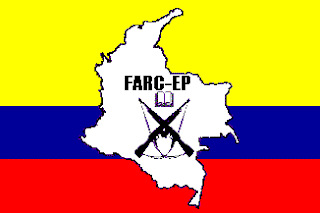
Q: What is the significance of the para-politics scandal for democracy in Colombia?

Raul Reyes: The para-politics scandal is the result of many years of the existence of drug trafficking in Colombian politics. Drug trafficking money circulates at every level of the government, in all the apparatuses of the State, all the governmental institutions. Drug trafficking has carried various presidents to the presidency. But aside from the money for presidential candidates, the money also funds congresspersons in the House and the Senate. Many judicial processes are also bought with drug trafficking money. Drug trafficking money has also penetrated inside the police, inside the army, inside the DAS, the SIJIN, that is to say, inside all the components of state security. The president is compromised with this money. This money is also found in industry, in commerce, in the pharmaceutical industry, in the chemical industry, in all of these.

For these reasons the situation in Colombia is serious. Here in Colombia, it is true what some say about it being a narco-democracy. I believe there is a narco-state, a narco-economy, but there is also a great hypocrisy in the Colombian political establishment because they sell the story that they are fighting drug trafficking. They go to the United States to ask for support to fight against drug trafficking. And they go to the European Union to ask for support to fight against drug trafficking. They organize forums and seminars about the fight against drug trafficking when they themselves are the drug-traffickers and the beneficiaries of drug trafficking. This is an extreme degree of hypocrisy, no?

Q: How has the demobilization of the paramilitaries affected the FARC?

The demobilization of the paramilitary does not exist, it is a farce. It is the government of Uribe trying to deceive Colombians and the international community. The intention of Uribe is to legitimize paramilitarism and drug trafficking in Colombia. The structures of those criminals continue functioning and, therefore, they continue murdering people. Now they use different names, the "New Self-Defense Forces" or the "Black Eagles," but they are the same. In many cases, the demobilization involved the drug-traffickers buying common delinquents, paying them a salary to wear a uniform and to appear like paramilitaries. Then a drug-trafficker appears as the commander of those boys to whom he paid a salary so that he is not extradited to the United States and so that Uribe can show that he is making peace with the paramilitaries. It is deception, no? And one they know they cannot maintain because the International Community is not fools, the International Community knows perfectly what is going on and the Colombian population is a witness to it all.

There can never be a peace process among those who have not been at war. There has never been a war between the Colombian State and the paramilitaries, because the paramilitaries are an appendix, an extension of the State. They have been fighting to defend the same State; they never took up arms against the State and for a new regime, or a new system. Their argument has been that the State is so weak that it needs reinforcing and so we are going to help the State.

Now, as it affects us, the FARC? It affects us in that we are the people, the people in arms; it affects us in that it is a great lie, a great deception; it affects us in that Uribe wants to show that the paramilitary groups and we are the same; but in practice it does not affect us. It is the population that it affects, because these types who were supposedly demobilized continue murdering people and disappearing people, they continue conducting their business. But it has all turned against Uribe, because over time it has become clear that his government is a spurious government, that is to say, an illegitimate government, because he became president by buying votes with drug trafficking money. His presidency is a product of electoral fraud. What's known as the Uribista coalition consists of gentlemen drug-traffickers and paramilitaries. For that reason, the illegitimacy of this government is immense. What is difficult to understand is why other decent governments maintain relations when they know all this about the president.

Q: Some claim that the FARC is nothing more than a criminal organization, that it is not political or ideological. What do you think of these claims?

Reyes: It is a campaign of the war; it is nothing more or less than a form of war. They use it to discredit the revolutionary struggle. This campaign has gained strength from September 11, right? When the twin towers fell in the United States and everyone began talking about terrorism, the Colombian government started calling the FARC and all the revolutionary organizations in Colombia and the world "terrorists." Then they could liquidate them, intimidate them and force them to renounce the revolutionary struggle. And this has increased war in the world. But the results, in our judgment, have not favored the United States, nor has Mister Bush, whose credibility today been dramatically diminished. The popularity of Mister Bush is not the best at this time, because of the war against Iraq. Álvaro Uribe, to the shame of us Colombians, is the only ruler in our region—South America—that has supported that war. I believe that the American people will take measures to discontinue the wrong policies of their government. Fortunately, one sees some expressions of this now. Some Democrats are beginning to say "No, we are not going to support the deployment of our troops to Iraq, they have to return to United States as soon as possible. We are not going to approve the budget for the war. Neither is we going to approve more money for Plan Colombia without conditions. We are not going to sign an FTA with a government like the one in Colombia, which is a narco-paramilitary government, a corrupt government, a government that has fought an endless war against Colombians." We don't think that this is a solution, but is an important step that the FARC values. At least the Democrats are helping some thinking sectors in the United States to understand this phenomenon and to work to dismantle the machinery of war.

Many think that every American, by virtue of being from there, is an imperialist. For this reason the FARC has produced two or three documents indicating that we deeply respect and admire the American people, but we do have deep differences and are affected by the policies of the American State. Before the attack against Marquetalia in 1964, the embassy of the United States was contributing money for the war against the FARC and has always funded Colombian governments so that they can maintain the war against the FARC. And we recall what happened in the dialogues in San Vicente del Caguán with Pastrana. The government of Clinton was the first to oppose the dialogue, and Clinton is the father of Plan Colombia. The world has to know this and we cannot forget it in Colombia because it is part of our history. And what did we see happen with Plan Colombia, a continuation of the strategy of war, not only against Colombians, but against the region. The United States seeks to expand into this region that contains the greatest biodiversity in the world; it's called the lung of the world. There are geo-strategic interests that the United States intends to achieve through crimes, killings, slander and lies.

Q: Why do you think that members of the Democratic Pole have not been massacred to the same extent that members of the Patriotic Union were?

Reyes: I believe that the massacre that the Colombian State perpetrated against the Patriotic Union, the communists, and important revolutionary and union leaders has been costly for Colombia. Above all, I point to the slaughter of the leadership of the Communist Party. At that time there was a large Communist Party with very well developed, very well formed cadres. It would suffice to recall, among others, presidential candidate Jaime Pardo Leal and Manuel Cepeda Vargas, director of the newspaper VOZ and a senator of the republic. They murdered them all. None of them had ever been involved in guerrilla warfare, never. The ones that were guerrillas, the ones the FARC sent to help with the work of the Patriotic Union, I ordered them to come back once the murders became evident. And they all came, among them Iván Márquez, who today is a member of the Secretariat but at that time, was a representative in the House. The leadership of the Party continued because it was a legal party, but they continued murdering them one by one.

But with the Democratic Pole it is different. The Communist Party is part of the Pole, but it is a reduced Communist Party, a party that maintains the same political line, but has difficulty developing because it is frightened, struck by the orgy of blood that was the genocide against the Patriotic Union. And inside the Pole, there are different sectors. Inside the Pole there is the right, the social democrats and the left—the Colombian Communist Party, the Marxist-Leninist Party and other revolutionary expressions, some Trotskyists, but all too small and without much influence in Colombian political life. The social democrats have the largest presence in the Pole and they are taking advantage by trying to get to the presidency of the republic; to attain important positions inside the government, inside the State. Among these are several demobilized members of the M-19: Navarro, Gustavo Petro and others. Also, there are some who left the Communist Party to join the social democrats and they are proclaimed the "democratic left ." These include Lucho Garzón and Angelino Garzón, among others. These people have accepted the establishment, the State, because they calculate, and it's a miscalculation, that they will be able to attract the revolutionary left. But it so happens that the revolutionary left cannot be attracted to the social democrats because we are conscious that social democrats end up favoring the right, the bourgeoisie.

In the fight for the New Colombia, "la patria grande" and socialism, we are indicating that any important change in Colombian life such as the search for a lasting and final peace, a peace without hunger, a peace with social justice, a peace with liberties, a peace with dignity and with respect for our sovereignty should include the FARC and the entire revolutionary left. But these social democratic sectors in the Pole want to sell the idea that they can resolve the country's problems while excluding the left and by doing favors for the right. For that reason we do not see a great difference between the social democrats and the right headed by Álvaro Uribe Vélez.

Within the Pole, the struggle for the revolutionary left—represented by the communists—against the social democrats is very hard, it is very difficult, because the social democrats have the support of the right. And now they are determining who is going to be the new mayor of Bogotá, the successor to Lucho Garzón. And clearly, nobody in the Democratic Pole wants Bogotá's city hall to return to the hands of the extreme right. But the social democrats, united with the right, want to continue the same programs, the same politics that have been developed under Lucho Garzón and they don't want anything to do with the revolutionary left, they want to try to exclude it. Therefore, Navarro Wolf and Petro proposed, without the consent, or without a consensus among the leadership of the Democratic Pole, the name of Maria Emma Mejía to be the candidate for mayor of Bogotá. Maria Emma Mejía is a Liberal who became close to the Pole, and finally joined the Pole, but she has never been on the left. What we see here is that, with this political maneuver, Navarro and Petro intend to flatter liberalism with the one hand and Uribismo with the other, while at the same time hurting the revolutionary left inside the Pole.

It so happens that the commitment is not to the people, the commitment is to fight for new possibilities to attain positions inside the government. However, within the Pole, some continue to fight to maintain it a little toward the left. They say that if the Pole cannot be maintained toward the left then later they are not going to be able to differentiate between the Liberal Party and the Pole. But it is going to be a very difficult fight.

I believe that for all these reasons, the Colombian State has not used the force, has not had the disposition to commit the assassinations, that it did in the past. But nevertheless, it should be noted that they do continue murdering people, but they are selective murders of the people that truly are on the left. These people are union leaders, peasant leaders and teachers who are engaged in the struggle on behalf of the people. They murder them and as usual nobody is held responsable because it is terrorism by the State.

Q: Why does the FARC continue to use home-made mortars in attacks against police stations when these weapons repeatedly cause civilian casualties?

Reyes: There are two things here. One thing is the utilization of mortars against the public forces, which is the end for which they are used. The FARC does not have heavy armaments, the FARC as you know has still not been recognized as a belligerent force and cannot obtain the armaments that it should possess as an army. So it develops a lot of homemade armaments to use against the public forces: the police, the army, DAS, navy, and air force. Many times those who operate these apparatuses, the mortars or other weapons, commit errors. They aim at the police station but they strike the neighboring house. That has occurred a few times. It's lamentable, of course; there is not a single justification for it. But they are human failings, caused by the nervousness of whoever is launching it. Or it is a failure in the structure of the mortar. This is a failure that has occurred and we are trying to correct it so that these mistakes that affect the population won't happen. But sometimes it is neither of these. For example, there is a battle against a police station and then the air force arrives—airplanes and helicopters—and they shoot and bomb everything including the neighboring houses, the church, all that, and then later they say that the guerrillas were responsible for the destruction.

Q: Some human rights organizations claim that the FARC recruits children, sometimes forcibly. How do you respond to these accusations?

Reyes: I think there is disinformation there, because those who join the FARC are between 15 and 30 years of age that is the norm. Nobody younger than that joins. The FARC never forces anybody to join; it is completely contrary to our safety regulations. Why would I give a weapon to someone that has been forced to join and then tell him he has to be my bodyguard? The guard is going to make me pay right there with that weapon. This is disinformation from these organizations. It never happens. What causes this disinformation? In many cases there are boys and girls that join and then later, for one reason or another, they decide to leave. Life here is very hard, one must be disciplined. Perhaps they had family that they couldn't see, a son or a daughter, or a boyfriend, or a girlfriend. Or they thought that this struggle would be easy and then they aren't willing to make the sacrifice so they leave. If they are youths, I'm referring to those less than 20 years of age, then in many cases they are going to say that they were forced to join in order to defend themselves against the repression of the police, and also in many cases of their families.

Then there are cases in which there are those who want to fight in the guerrillas but many times their parents do not want them to join because the father wants to have his son at home and the mother wants her daughter there. They do not want them to join. But they persist and join the guerrillas; they flee from their houses and appear at our guard posts. It so happens that they join the FARC voluntarily. But many times when they leave they lie to their fathers and mothers and say that they were forced to join and the fathers and mothers believe them. And later, if the authorities conduct an investigation, the parents say that their son or daughter was forced to join and then that information is collected by Amnesty International or others. But I reiterate, it is not the policy of the FARC to recruit children or to enlist anybody by force.

Q: Why does the FARC use anti-personnel landmines when they cause civilian casualties?

Reyes: The FARC uses mines against the public forces. The mine fields are used against the public forces, never against the civilian population, never. There are cases when a road is suddenly mined and a civilian might not know they are there and through some carelessness of the guards or himself he fails to avoid it. Sadly, those cases have always occurred. But the norm is that one must try and ensure that there are no civilian casualties.

Q: The Uribe government claims that Plan Patriota is succeeding in defeating the FARC and bringing territory under state control. How has Plan Patriota affected the FARC and peasants in the region?

Reyes: I am in charge of analyzing the consequences of Plan Patriota and the ways it has hurt the revolutionary army of the FARC, as well as the ways it has hurt the civil population, the popular and social organizations, and the unarmed revolutionaries. And we have found that those who have suffered the least are those of us who have taken up arms. While we do not possess the weapons that the State has, much less the aid and the advising that it has received from the United States, but still in the end we are two armed forces, two armies. One army has a lot of power, many men, a lot of technology, air and naval support, and advisors who they say know everything. It has a very clear objective: to liquidate the FARC, to kill or imprison its main leaders, to recover prisoners by force and to force the survivors to sign whatever agreement Uribe wants. That has been, and still is, the objective of Plan Patriota.

But it so happens that it has not achieved its objective, it has failed to get any of the main leaders of the FARC, it has failed to weaken the FARC and it has failed to recover the prisoners of war. On the other hand, however, it has hurt the civil population; by applying the theory that "the friend of my enemy is also my enemy" They have displayed many guerrillas captured in certain regions. However, it so happens that they were not guerrillas, they were people considered to be friends of the guerrillas. I remember one case in Cartagena de Chaira where, according to the press, 80 guerrillas from the 14th Front were captured. But the capture of 80 guerrillas has never occurred, never. But that was the news that was what was fed to the people's imagination. But it so happens that not one of them was a guerrilla, they were from the population and later they had to free them all because it wasn't true. However, when they freed them nobody from the army said, "I was mistaken." One time they said that 200 FARC guerrillas were killed in the Cañon del Duda. It also wasn't true. But who is going to challenge that?

But truly those who have been affected most are the peasants, the civilian population. Many people have fled, shut their businesses, abandoned their farms because of fear and because in many parts the airplanes drop bombs and shoot their machine guns indiscriminately. And there are others who have been affected, union members and all these sectors, because they say that they are all terrorists, or they are the ones that support the "terrorists" and so is likewise the enemy. Then they arrest them and imprison them. The people are affected by the current government; it is a fascist, dictatorial government that has used war as a form of governance and lies and slander as a form of pressure and to distort what is really happening.

Plan Patriota is a true failure for the government. Even more, it is not only a failure for the Colombian government but also a failure for the government of the United States, because it is the United States who finances Plan Patriota and the United States who supplies the military advisors for the war against us. Uribe and the Colombian army were convinced that with all that money and with all that advising they would be able to finish off the FARC, but it so happens that they have not achieved their objective. The FARC has not been weakened militarily or politically by Plan Patriota.

But Uribe persists in his objective and has large numbers of troops throughout the Colombian territory. There are many troops in the areas containing all our blocs, all our fronts, our columns, our companies, and those troops are on all sides trying to find us in order to annihilate us; there is constant fighting. Among the troops of the State there have been wounded and dead. They are the ones who are risking their lives, it is not Uribe, it is not the Colombian oligarchy, it is not Mister Bush, it is the Colombian people. They are in the police and the army to earn a salary because often they cannot obtain work anywhere else or are unable to go to university. They are defending the interests of the exploiters of Colombia, the interests of the multinationals, the interests of the empire; they defend those interests at the cost of their own lives.

Q: Plan Colombia is now more than six-years-old and the Bush administration intends to continue it for several more years. How has Plan Colombia affected Colombian peasants?

Reyes: The Colombian government, with the backing of the entire political establishment, eradicates, fumigates plantations. And these fumigations are a great business venture in which they receive millions of US dollars, originating from the American people and delivered by the US government. This money is used for fumigations. Those most affected by the fumigations are the peasants, because they do not only destroy the coca plantations, they also destroy food products: bananas, yucca, corn, beans, sesame, potatoes, everything. And besides pets, they affect chickens, pigs and the people. There are cases of children affected by the glyphosate, pregnant women that have miscarried, many illnesses caused by the poisoned environment and water, right? And they still haven't achieved the desired results in the eradication of illicit crops because the peasants develop new forms of counteracting the effects of that poison on their farms. To quickly counteract it, they grow in other places and the business continues. It continues because there are people who buy the drugs, because of the consumption in the developed world. It is an extremely large consumption with prices that favor, not the peasants, but the drug-traffickers and the intermediaries.

The FARC has a presence in every part of Colombia and knows the situation of the peasants very well. It knows that the peasant does not grow coca or poppies in the mountains because he is a drug-trafficker; no, the Colombian peasant is not a drug-trafficker. The Colombian peasant has had to resort to growing these products because of the predatory effects of the neoliberal model. Because it is better business to import corn from the United States or another country, or to bring cattle meat from Argentina, than to produce them in Colombia. Already it is better for business to import coffee from Vietnam than to produce it in Colombia because there are no subsidies. Then the peasant has to find another way to subsist, and so he grows coca.

For that reason the FARC's proposal, from the dialogues in San Vicente del Caguán, calls for the replacement of coca cultivations, seeking a solution that will put an end to the phenomenon of drug trafficking because the FARC considers it a cancer for society, for humanity, that one must fight. We offered to make the municipality of Cartagena de Chaira a municipal pilot, that is to say, we wanted to show in that municipality that it is possible to fight the phenomenon of the production of the commodities of cocaine. Likewise, we put forth the proposal calling for the legalization of consumption. I believe that this issue badly affects all of us Colombians and it is not solely the responsibility of Colombians; it is the responsibility of the consuming countries, the responsibility of the bad governments that we have had in Colombia, the responsibility of the poor policies of the International Monetary Fund and of the banking sector, the responsibility of the countries that produce the chemical precursors, that is to say, in short, the responsibility of the misconceptions of the neoliberal model. It has drastically affected Colombia. The neoliberal model has also affected the developed countries, like the Europeans, with many people in the streets begging for charity, children cleaning car windshields, but in underdeveloped countries like Colombia, or other countries in what is called the Third World, it is much worse.

Q: How is it possible to change the neoliberal policies implemented by President Uribe and previous governments in Colombia?

Reyes: For the FARC the only way to change the neoliberal model and the policies of previous governments and of the current one is by taking power. It must begin with the formation of a new democratic, patriotic, diverse government of national reconciliation, which seeks to change the course of the country in a way in which it is truly the people, with their leaders, who build the future. Without this it will be impossible because Colombia has endured 50 years of war during which each of the governments did the same thing, even before the neoliberal model appeared and they applied the prescriptions of the International Monetary Fund and the World Bank. And then the neoliberal model appeared and they became wedded to neoliberal policies. This was before Uribe, it was those who preceded him in the presidency. Then they developed the terrorist state and this has increased the problems.

So we think that to truly achieve change, and the ones demanding this are the majority of the Colombian people, what is needed is to form a completely different government to that of Uribe and the previous governments. That is to say, a government that is committed to deep changes and that opens spaces of democracy in order to be able to build the New Colombia. A new Colombia where people would not be exploited and, of course, there would be no exploiters. But to achieve this is a task for titans, because Colombia has a mafia class and a corrupt murderous ruler. And as long as they continue controlling the destiny of our country it is going to be very difficult for the people to become controllers of their own destinies. This is the reason that the FARC continues its revolutionary struggle.

We spoke in a previous question about how they assassinated the Patriotic Union and they assassinated the communists, and how this closed spaces for the legal struggle. And we noted that they continue to murder popular leaders and continue to carry out some selective assassinations. We think this validates the revolutionary armed struggle, whose end is not war. The end of the revolutionary struggle being waged by the FARC is peace. For us, peace is the fundamental thing. We understand that peace is the solution to the problems that affect our people. We understand that peace means that in Colombia we have a true democracy. Not a democracy for the capitalists, but a democracy for the people, who can protest, who can participate, who have the right to live, who have the right to healthcare, to education, who have the right to communication, to electricity, to agrarian reforms, to fight corruption, to not have to kneel before foreign powers, but to be a country free, independent and sovereign with respectful relations with all countries on equal terms. Also, that the weapons of the army not be not used against the people, but just for the defense of our sovereignty and nothing more. To achieve that objective is why we are here in this jungle. And in search of that objective we are willing to continue for as long as is necessary.

And our proposal for a "prisoner exchange," which cannot be modified to the favor of Mister Uribe, is issued with the desire to solve one of the by-products of the conflict. Colombia suffers an armed, social, political, and economic conflict that no government has wanted to resolve. Therefore, we say, the signing of an agreement to liberate prisoners on both sides could also be the door to the beginning of a new dialogue to work towards achieving peace. As I already said, the FARC seeks peace, but not a peace that comes from surrender, nor a peace that accommodates the leaders of the organization and certain friends, but a peace for the people. It must be a peace that protects the life and the dignity of our population.

Q: What needs to be done in order to achieve a just peace in Colombia and greater equality between the rich and poor?

Reyes: To achieve that objective there needs to be a change in attitude. The ruling class must understand that the best business is peace. That peace is a business and that business requires an investment, because the large amount of wealth that exists in Colombia, which results from the labor of the people, could generate much more wealth if there was peace. But since there is a war by the State against the people, they invest in the war and not for the benefit of the population, therefore Colombians are getting poorer. The gap between the rich and the poor grows and popular discontent grows and so does repression against those who dare to express their discontent through legal means. Often they are murdered, forced into exile, displaced by threats, or their goods are expropriated, then the number of guerrilla’s increases and the armed struggle grows. In the case of the FARC, it is a political-military struggle. Uribe Vélez claims that there is no internal conflict in Colombia. That is the first great lie that he tells to Colombia and to the world and according to that great lie there is nothing to resolve here. But there is a confrontation here in which people are constantly being killed, and for which he himself is asking for aid from all sides in exchange for mortgaging the sovereignty and the dignity of the Colombian people. And so one must ask, "If there is no internal conflict then why demand aid?" It is completely contradictory.

The attitude of the ruling class must be to declare, "From now on the best business for us is peace. And as the business for us is peace then we are going to invest in it. We are going to return part of what we have taken from poor Colombians and invest it in peace." But I do not believe that the ruling class will arrive at such a decision easily because the essence of capitalism is something different: it is to obtain greater profits at the cost of the sacrifice of the population. For this reason, we are motivated to wage the revolutionary struggle. We are motivated to support actions by the popular masses, protests by the unions, by organizations, and likewise guerrilla actions. And this is what we call "the combination of all forms of struggle," because the FARC is a revolutionary army and it does not only engage in the armed struggle. The FARC is characterized as a political-military organization. Its leadership is a political cell. All of the FARC is a political cell. Therefore, its work involves the formation of guerrillas who are strong both politically and ideologically so that they understand it is a fight for the structural changes that the country requires and not for the benefit of certain people. And so that they understand that this fight requires making sacrifices including leaving one's family to be in the jungle and exposed 24 hours a day to attacks by the enemy. We feel that with this sacrifice we are contributing to the revolutionary struggle of Colombia and other peoples of the world.

Q: What is the FARC's vision for Colombia?

Reyes: When we speak of the New Colombia we are speaking of a Colombia in which there are neither exploiters nor exploited; of a Colombia without social, economic or political inequalities; of a Colombia without corruption; with neither paramilitarism or state terrorism; of a Colombia with industrial development; of a worthy Colombia, independent and sovereign; a Colombia where resources are invested in scientific research and technological development; a Colombia where the environment is protected; a Colombia whose wealth is used for the benefit of the population; a Colombia that does not continue privatizing, that does not continue selling the businesses of the State but instead uses these businesses to benefit social programs; a Colombia with agrarian reform, not an agrarian reform that delivers land to the people and keeps them hungry, but an agrarian reform with technical assistance; an agrarian reform that includes infrastructure for the peasants and that makes it possible for their children to study; an agrarian reform in which a market and the purchase of their products is guaranteed; an agrarian reform in which they can obtain affordable credits from the State; a Colombia with employment; a Colombia with subsidies for the unemployed; a Colombia that guarantees education, healthcare, homes and all that.

That it is the Colombia that we dream of and that we call the New Colombia, directed by a new State, by a new democratic, patriotic and diverse government, which does not exclude any part of the population. And that everyone that is interested in contributing to that new government can do so, even if he is a businessman. If he is going to pay some taxes and he is not going to exploit the workers and he is going to pay them according to the law, then it is not a problem that he earns profits. As long as he pays taxes and complies with the norms of the law not to exploit the population. Because the large businesses cannot be allowed to earn profits by paying starvation wages and evading taxes.


Sunday, June 24, 2007

Video of Interview with Maoist leader Prachanda

Video of Interview with Maoist leader Prachanda
Part 1

Part 2

Part 3


TRANSCRIPT OF THE INTERVIEW

As Nepal goes through a difficult transition, what is the stand of the country’s Maoists on the important issues that will determine the Future? Nepal’s Maoist leader Prachanda spoke exclusively to CNN-IBN on those issues in an interview on Devil’s Advocate.

Karan Thapar: Now that the interim Government has given itself the power to abolish the monarchy, if the King interferes in politics, don't you think you should withdraw your demand for the immediate abolition of the monarchy?

Prachanda: No, we don't feel that. Although the Parliament has already decided that two-thirds majority of Parliament can abolish the monarchy, in that sense we feel that our demand is justified.

Karan Thapar: So you want Parliament to abolish the monarchy immediately?

Prachanda: Yes, we want that Parliament should take initiative and monarchy should be abolished immediately.

Karan Thapar: But then what is the point of having a constituent Assembly in four or five months’ time. This should be decided by the Assembly.

Prachanda: The constituent Assembly is quite necessary to restructure the whole state. It is not the question related only to the monarchy.

Karan Thapar: But the monarchy is an important part of the structure of Nepal. Surely, this is a decision the Assembly should decide. If you don’t decide this in the Assembly, you are disrespecting the Assembly.

Prachanda: We are not disrespecting the Assembly. We have compromised with other parties that after the election, at the first meeting of the Assembly, we will decide the fate of the monarchy. But during this one-year period, it has been proved that until and unless the monarchy is there, it will create disturbance and try their best to derail the process. Therefore, we try to take initiative.

Karan Thapar: So the problem is that you don’t trust King Gyanendra ?

Prachanda: Exactly. But it is not the question of individuals. It’s the question of this feudal institution that should be abolished.

Karan Thapar: So you are not ready to let the Assembly take this important decision?

Prachanda: Why has the Parliament decided right now that two-thirds majority can abolish the monarchy before the elections?

Karan Thapar: But just because the Assembly has given itself the power does not mean it has to exercise the power?

Prachanda: But the provision is there that if serious disturbance comes from the monarchy, in our assessment, serious disturbance has already occurred through the monarchy.

Karan Thapar: All right. Let me question you on that. On Tuesday, your colleague, Baburam Bhattarai said that he is scared that the King might engineer a coup with the help of the Nepalese Army. He even said that General Katwal, the Army Chief is a foster brother of the King. Is that a real fear or is that Mr Bhattarai’s imagination?

Prachanda: It is an open secret that Mr Katwal has been educated and raised by the Monarch therefore he has the real relation with the Monarch. But right now we feel that they are trying to activate their forces. So that is the danger from that kind of a relation.

Karan Thapar: So you are really scared that the King and Mr Katwal could organize a coup?

Prachanda: No, right now, I don’t think they will organize a coup. In some section of leadership of the Army, we heard that they are trying to do some things.

Karan Thapar: But you are not taking that seriously.

Prachanda: No I don’t think as a whole Army, they will take such an initiative. In the whole history of our political development, the Army has not taken such kind of decision. They also know the overall political consciousness of our masses and people.

Karan Thapar: So you trust the Army and are prepared to trust General Katwal?

Prachanda: It is not a question of trust. Katwal may have some sentiments with the Monarch and you will imagine some kind of disturbance. But on the whole I don’t feel that they will be able to take such an initiative.

Karan Thapar: This is very interesting because on this issue you have a slightly different opinion to your deputy. Mr Bhattarai is rather scared about this. You are not worried.

Prachanda: We have information that in some sections they will try but the will not be able to, that is my point.

Karan Thapar: Though the Prime Minister has not said this officially and formally, many people believe that he would like to retain the monarchy in a ceremonial form, perhaps like the British Queen. Do you believe that is Mr Koirala’s actual position?

Prachanda: Yes, I think five years back I had a regular contact discussion with Mr Koirala and he’s not quite clear about his own position. He vacillates questions of the monarchy and the republic.

Karan Thapar: Is he confused or is he trying to find a clever way of keeping the monarchy?

Prachanda: Previously I thought he was trying to find an artful way of abolishing the monarchy. But in the latter half of the development I think he was trying to find an artful way to save the monarchy.

Karan Thapar: So the Prime Minister is trying to save the monarchy?

Prachanda: Yes, when he says ceremonial monarchy and then he says I want to give some political space to the Monarch, all these things prove that.

Karan Thapar: On Sunday the PM revealed that he had advised King Gyanendra and Crown Prince Paras to abdicate in favour of Prince Hridendra. If that were to happen, could the Communist accept a ceremonial monarchy?

Prachanda: It is not a question of Communist. The whole nation will not accept such a ridiculous thing.

Karan Thapar: Not even Prince Hridendra, who is only four or five years old?

Prachanda: Yes, nobody will agree to that.

Karan Thapar: If the constituent Assembly meets and decides to retain the ceremonial monarchy, will the Maoists respect and honour that decision?

Prachanda: We do not believe that kind of a result will come.

Karan Thapar: But if it comes?

Prachanda: If it comes, we will respect what the masses want and we will teach the masses what they did is not correct but we will respect the decision.

Karan Thapar: So you will accept a ceremonial monarchy if the constituent Assembly decides to keep one?

Prachanda: My point is that we will respect the decision and ideologically we will again peacefully try to educate the masses.

Karan Thapar: Peacefully? There will be no arms struggle?

Prachanda: Time and again I have cleared this point that we will respect the decision.

Karan Thapar: The reason I want to clear it again is because at the moment you are demanding immediate abolition. So you will accept a ceremonial monarchy if the constituent Assembly decides to keep one?

Prachanda: Yes. That’s why I’m here. If we do not respect the decision, how can we be part of the elections?

Karan Thapar: That’s interesting because at the same time you want to abolish the monarchy before the Assembly meets but leave that aside. Let us now move on the question on the election of the constituent Assembly. On the 15th of this month, speaking in Kirtipur, you said you don’t even believe it’s likely to happen in December. Given that the election has already been postponed once, are you confident it will be held this year?

Prachanda: We have serious doubt it will be held. We are for the election. As soon as possible, it should be held but because of the experience we have serious suspicion.

Karan Thapar: You are seriously doubting that the election will be held this year?

Prachanda: Yes, we have serious doubt.

Karan Thapar: How much of a responsibility will the that of the Prime Minister?

Prachanda: Main responsibility should be taken by the Prime Minister because when we entered in the negotiation and the agreement, the PM time and again said if I will not be able to hold elections in June, then morally I will not be the PM.

Karan Thapar: Do you think, because he has not been able to hold the elections by June, morally he should step down?

Prachanda: I am not saying that. It’s the PM himself who said this time and again.

Karan Thapar: But you are saying that the responsibility for delay, the failure to hold the election on time is that of the Prime Minister.

Prachanda: Main responsibility is that of the Prime Minister.

Karan Thapar: Why did he fail? Because he does not wants to hold it or is it because he is weak? What is the explanation?

Prachanda: My point is that the Prime Minister and his party could not take the concrete position of the monarchy ad the republic. This vacillation in its political position is the main reason.

Karan Thapar: In your eyes, is the PM vacillating because he is actually trying to find a way of retaining the monarchy and therefore he keeps delaying the elections.

Prachanda: I have serious doubts that the PM wants to retain monarchy and therefore he is trying to play with the situation.

Karan Thapar: How much tension has this introduced in your relationship with the Prime Minister?

Prachanda: There have been many ups and downs, twists and turns in the relationship but yet I think that the relation is not so cold. We are in a warm relation which some times gets very tough as well.

Karan Thapar: Sher Bahadur Doeba, the leader of the Nepali Congress Democratic Party says that the obstacle to holding election with the constituent assembly are the terrorist acts of the Maoists. He blames you.

Prachanda: It is quite wrong. It is Sher Bahadur Doeba himself who doesn’t wants to have elections. For the first time when we entered into this negotiation with Doeba, he is the person who was quite against this election of the Constituent Assembly.

Karan Thapar: Let me put this to you. Suppose the elections do not happen in November-December. How serious will that be for Nepal?

Prachanda: It will be a disaster, I think. Whole political scenario can change in a serious anarchy in this country. I don’t want to imagine the results.

Karan Thapar: If such a disaster happens, can the interim government survive that disaster?

Prachanda: I don’t think so. In that situation, another serious mass movement should be organised and we will be with the masses.

Karan Thapar: When you say that another mass movement should be organised, are you talking about a return to arms struggle?

Prachanda: Not at all. It will be a peaceful mass movement.

Karan Thapar: If you are going to organize a peaceful mass movement, does that mean also that you will leave the interim government?

Prachanda: When we will be forced to go into a serious mass movement, at that time we will abandon the interim government. We will be out of the government, but will be in the legislature.

Karan Thapar: So you will be in the Parliament but leave the interim government?

Prachanda: Yes. That’s right.

Karan Thapar: So let me repeat, what you are saying, that if there are no elections in the constituent assembly in November or December, it will (a) be a disaster in Nepal, (b) you will launch a mass movement and (c) and at that point you will leave the interim government.

Prachanda: Yes. Exactly. We will leave the interim government but will retain in the Parliament and we will handle the mass movement in a peaceful way.

Karan Thapar: Mr Prachanda lets talk about your party of the Maoists. You have agreed to surrender your arms, to out your combatants in camps, to return or cease property and discipline the young communist league. Your critics say that on all these issues, you are cheating. Tell me, are your cadres not refusing to obey your orders or are you only too happy for your orders not to be obeyed.

Prachanda: I want to make it clear that we have not surrendered our arms. We have agreed to integrate both the armies on a new basis.

Karan Thapar: Let me explore that. E N Martin the United Nations Special Representative says that 30,850 Maoist combatants have registered in camps, but only 2,855 arms have been handed it. That is a huge discrepancy. Are you holding back your arms?

Prachanda: The data is incorrect. I think it is somewhere close to 3000.

Karan Thapar: But look at the difference, thirty thousand combatants and just three thousand weapons. Where are the other weapons?

Prachanda: Yes, it is a serious question and time and again I’ve tried to make it clear that our comrades are not all armed with modern weapons. They have been armed with grenade, crude bombs and the likes.

Karan Thapar: Have you surrendered everything? Or are you hiding some stock?

Prachanda: Yes, we have stored all the bombs, grenades, guns and everything. We have in fact registered all the arms and explosives.

Karan Thapar: Let me quote to you what Nankishore Punj the leader of your Maoist army said. He said, “If we detect more arms in the future that are presently out of our memory and control, then we will inform the UN monitors.” How can you not remember where your arms are? It sounds as if you are cheating.

Prachanda: Its not a question of cheating. When we were in the war, we remained in the rural areas, jungles and scattered in different parts of the country. We did not have a really disciplined barrack like that.

Karan Thapar: So you cant remember where your arms are?

Prachanda: The arms may have gone missing in few places.

Karan Thapar: Alright. Let me put in something else to you. E N Martin says that instead of surrendering and registering in camps, your combatants have instead joined the young communist league. In that place, even boys under 18 have been registered.

Prachanda: You have to understand the whole phenomena of communist league. You should go back to the question on the paramilitary forces we have organised during the conflict.

Karan Thapar: Have you moved your Maoist Army combatants into the League?

Prachanda: No that’s not true. However in the league, some combatants are there who were the commanders in PLA. But we have not kept this any secret.

Karan Thapar: These combatants who have joined the young communist league—are they indulging in violence? Because the Prime Minister has gone on record to say that the Young Communist League is like a ‘young criminal league.’

Prachanda: I am sure he must have been out of his mind when he said such a thing. It is a serious charge that they have made. Later on when we discussed it with the PM he said he was sorry for the comment.

Karan Thapar: Did he apologise to you? Did he actually used the word ‘sorry’?

Prachanda: Not exactly. But by his explanation he sounded apologetic. He said it was due to an emotional outburst and the given situations that he said such a thing.

Karan Thapar: Its not just the PM who accuses the Young Communist League of indulging in violence, extortion and intimidation. Sher Bahadur Doeba also says similar things. Many of the members of the Seven Party Alliance too feel the same. Are you using the Young Communist League to intimidate or to threaten?

Prachanda: In my opinion people are exaggerating the whole issue.

Karan Thapar: By saying they are exaggerating, you are hinting that there may be little truth, but they are exaggerating it.

Prachanda: There may have been small incidents, but we are trying to minimize any kind of violence.

Karan Thapar: So do you accept there have been such instances?

Prachanda: Yes.

Karan Thapar: You also told Former President Jimmy Carter that you would correct the ‘mistakes’ of the Young Communist League. So that means you clearly accept those mistakes?

Prachanda: When we were there at the Central Community meeting, I myself said that we will have to minimise such kinds of incidents. But mainly and basically what communist league is doing is correct because they are building roads, plating trees and doing much public work.

Karan Thapar: People say, Prachanda if orders about returning seized land, Maoist leaders disregard him. Do your local cadres disregard your orders?

Prachanda: No it is not the case. Returning the land is a very sensitive question. We have initiated from the Western districts of Nepal. But we still have to settle the question of settlement of peasants.

Karan Thapar: Can people trust Prachanda to do what he says.

Prachanda: They trust and they should trust. We have initiated the process and this is again a very sensitive issue that we have to decide the settlement of peasants.

Karan Thapar: So what you are saying is: Give me time, I will surrender seized property.

Prachanda: It needs some time.

Karan Thapar: But you will fulfill the commitment to surrender seized property? Is that a promise?

Prachanda: Yes that’s a promise.

Karan Thapar: And you will also ensure that the Young Communist League do not indulge in violence, that’s another promise.

Prachanda: Yes that’s a promise. But you should also see that many a times provocation leads to such things. Like it happened in the Tarai region of the Madhesis, when our comrades were provoked into violence.

Karan Thapar: But will you exercise control, now? Will you keep telling them not to indulge in violence?

Prachanda: Yes, very much.

Karan Thapar: My last question is, when the elections to the constituent assembly take place, if you don’t get a majority, will you accept a minority role or will you boycott the Assembly.

Prachanda: We will respect the decision. We may be in the minority and we will struggle ideologically and politically.

Karan Thapar: But will you accept the minority position if that is the outcome.

Prachanda: We must have to accept it.

Karan Thapar: Thank you Mr Prachanda for this candid interview.


CNN-IBN